Identified verse by verse and explained using the most up-to-date scholarly information about the Bible, its texts, and the men who wrote them — by Dr. Steven DiMattei
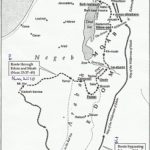
Since I’ve already dealt with the Through-Moab (D) or Around-Moab (J) contradiction in #281, I thought I’d spend some time writing about how scribes of the ancient world legitimated the conquest and ownership of land as well as explained the loss of their land. This was accomplished through the use of a commonly used literary topos or convention, and in our present case both the Bible and the 9th century BCERead More
Deuteronomy 2:9-23 is another passage uniquely crafted by the Deuteronomist (see others in Contradictions #349, #350, #351, and #370) and was designed to convey themes and ideological beliefs dear to this 7th century author and his scribal guild. Said differently, and on a textual level, despite “Moses’” insistence that after they passed through Edom—or around Edom or back toward the Red Sea or forward to Hor, depending on which tradition oneRead More
Hebrews 11:3 is often invoked as a proof text for the doctrine of creatio ex nihilo. While some may wish to debate this reading, since the verse can be read as an abstract statement about faith, literally, “not from that which is visible did the things that are seen come into being,” I shall nevertheless treat it as if it did proclaim this doctrine. For this allows us the occasion toRead More
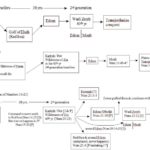
And the days that we went from Kadesh-barnea until we crossed the wadi Zered were 38 years, until the end of the generation (the men of war) from the camp as Yahweh swore to them. (Deut 2:14) We have already thoroughly looked at the contradictory traditions preserved in the Torah concerning Kadesh Contradiction #260. Where was Kadesh: in the Wilderness of Paran OR Zin? Contradiction #261. When did the Israelites arriveRead More
Everyone knows that when the Israelites asked for food and water from the Edomites, the Israelites’ brothers from the line of Esau, and permission to pass through their country they were denied these things and forced to pass around Edom. This story we know from Numbers 20:14-21, which scholars have identified as part of the older southern Yahwist tradition [J]. Yet when Moses renarrates this story some 40 years later, narrativelyRead More
The story of the spying of the promised land is initially recounted in Numbers 13-14, which as we have already seen is a composite text of the Yahwist and later Priestly traditions (see Contradictions #233, #234, #235-236, #237, and #238-240). When we say “composite text,” we mean that the text/story in the form that it has come to us modern readers is composite in nature; it is composed of two onceRead More
In my previous post, Moses Retells His Story (Part 1) we saw how a reader might react to the realization that Moses’ renarration of the appointment of the judiciary in Deuteronomy 1:9-18 differed significantly from its “original” narration in Exodus 18:13-26. In that post, I neither attempted to explain why, nor how, these differences existed. I simply presented our 1st person reader grappling with these textual inconsistencies and contradictions which heRead More